
How Do I Get My Business Recommended by ChatGPT and Other AI Search Tools?

AI tools like ChatGPT are already recommending businesses to millions of users, but most companies remain completely invisible to these systems. The difference comes down to specific trust signals that AI actively scans for across the web, and most brands don't know what they are.
Key Takeaways
AI tools like ChatGPT recommend businesses based on authority and trust signals, not paid ads - meaning your organic presence is what gets you cited.
Being present across multiple high-authority platforms (news sites, YouTube, podcasts, Reddit, and more) dramatically increases the likelihood of AI surfacing your brand.
Google's E-E-A-T framework - Experience, Expertise, Authoritativeness, and Trustworthiness - is one of the clearest maps for what AI search tools actually look for when deciding who to recommend.
Earned media placements on national outlets and industry publications carry far more weight with AI than any ad spend ever could.
The compounding nature of content distribution means businesses that start building their digital footprint now will have a significant edge as AI search continues to grow.
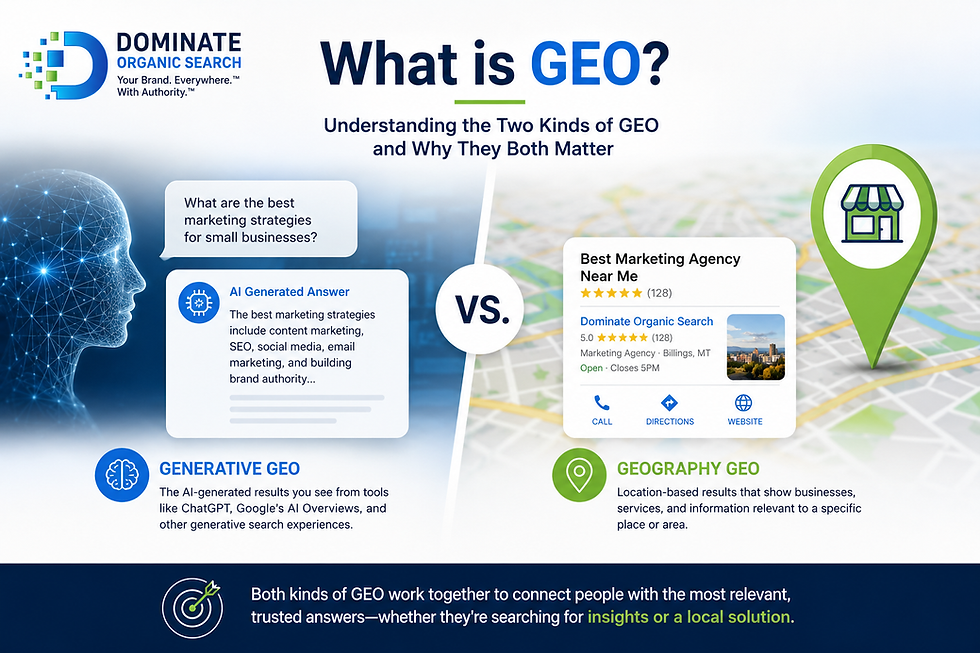
The rules of search are shifting fast. AI tools like ChatGPT, Google's AI Overviews, and Perplexity aren't just returning a list of links - they're synthesizing information and actively recommending specific businesses, experts, and sources. That changes everything about how a business needs to show up online.
AI Aims to Cite Trusted Sources - But Only Finds What's There
Here's the challenge most businesses face: AI doesn't invent sources. It can only work with what's already been published, indexed, and recognized as credible across the web. If a business isn't showing up in authoritative places, it simply doesn't exist to these tools - no matter how good the product or service actually is.
AI search tools are designed to understand user intent and surface the most relevant, trustworthy information available. That means a business's overall digital footprint - where it's mentioned, how often, and on what kinds of platforms - is now a direct factor in whether AI will recommend it. Businesses that haven't invested in building that footprint are invisible by default.
This is why a growing number of growth-focused businesses are rethinking their entire approach to online visibility. Dominate Organic Search specializes in exactly this intersection - helping brands build the kind of authoritative, multi-platform presence that positions them to be found and cited by AI search tools, without relying on paid advertising.
Why Brand Authority Is the New SEO
Traditional SEO was largely about keywords, backlinks, and technical site structure. AI search raises the bar. These systems are trained to evaluate credibility at a much deeper level - and they're surprisingly good at it. Brand authority is now the currency that matters most.
How AI Decides Who to Recommend
AI models like ChatGPT prioritize information from reputable and authoritative sources when generating responses. They're not just scanning for keyword matches - they're evaluating patterns of credibility: Is this brand mentioned in multiple places? Do established outlets reference it? Is the information consistent and detailed across sources?
A business that shows up in a local blog once is very different from a business that's been featured in Digital Journal, discussed on industry podcasts, cited on YouTube, and mentioned across news networks. AI sees that difference clearly.
E-E-A-T Signals AI Actually Looks For
Google's E-E-A-T framework - Experience, Expertise, Authoritativeness, and Trustworthiness - is foundational to understanding what AI search tools reward. Businesses that consistently publish high-quality content on reputable news sites, industry blogs, and podcasts meaningfully strengthen all four of these signals.
Experience: Real-world demonstrations of doing the work - case studies, examples, documented outcomes.
Expertise: Content that shows deep knowledge of a subject, not just surface-level coverage.
Authoritativeness: Third-party validation - being cited, featured, or referenced by recognized platforms.
Trustworthiness: Consistency across sources; an accurate, reliable digital presence that checks out when AI cross-references it.
Omni-Presence: Be Everywhere AI Looks
If AI can only recommend what it finds - and it looks across a wide range of trusted sources - then the logical strategy is to be present on as many of those trusted sources as possible. This is the core idea behind omni-presence publishing.
High-Authority Platforms AI Prioritizes
Content distributed across diverse, high-authority platforms is significantly more likely to be indexed and considered credible by AI algorithms. Each major platform carries its own trust weight:
YouTube - the world's second-largest search engine, and a platform AI tools actively pull video content and transcripts from.
Reddit - increasingly cited by AI for community-sourced opinions and real-world experience.
Podcast content - especially when repurposed into transcripts or other formats, podcast material contributes to AI visibility and credibility, signaling reach across audiences.
News networks and Google News-approved sites - among the strongest signals of legitimacy available.
Platforms like Slideshare, Pinterest, and Vimeo - these can contribute to a brand's overall digital presence and content diversity, though their direct impact on AI recommendations is not as significant as news sites, YouTube, or Reddit.
Multiple Formats, One Compounding Footprint
The shift toward conversational AI in search means businesses need to be present in the formats their audience already uses - video, audio, articles, infographics, and slideshows. Each piece of content in a new format on a new platform is another data point for AI to find and reference. Over time, these touchpoints don't just stack - they compound. A brand published across hundreds of platforms becomes increasingly difficult for AI to ignore.
Earned Media Beats Paid Ads for AI Trust
One of the most important things to understand about AI search tools is what they're specifically designed to bypass: paid visibility. Ads don't earn citations. Sponsored content carries less weight than editorial coverage. AI systems are built to find credible information - and credibility, by definition, has to be earned.
Why AI Bypasses Paid Visibility in Favor of Credibility
Google's AI Overviews and tools like ChatGPT synthesize information from various trusted web sources - and the emphasis on trusted is key. Paid placements don't transfer trust to the brand being advertised. In fact, AI tools are often specifically trained to distinguish between promotional content and independently validated information. The businesses that get recommended are the ones recognized by outside sources, not the ones that paid to appear.
News Sites, Podcasts, and Industry Publications as Trust Signals
Securing placements on national news outlets and industry-specific platforms not only drives direct traffic - it signals to AI algorithms that a business is a recognized, credible entity in its field. A feature in a USA Today-affiliated outlet, a guest appearance on a well-distributed podcast, or coverage in an industry publication all function as third-party endorsements that AI systems recognize and weigh heavily. These aren't vanity metrics. They're trust infrastructure.
The Digital Dominance Protocol™ in Action
Building this kind of authoritative presence requires a system, not a one-off campaign. Dominate Organic Search developed the Digital Dominance Protocol™ as a structured, repeatable approach to doing exactly this at scale.
Strategize, Create, Distribute, Dominate
The process follows four clear phases:
Strategize - Identify the target audience, content angles, and competitive gaps.
Create - Turn business expertise into branded, SEO-smart content in multiple formats: news articles, blog posts, videos, infographics, slideshows, and audio ads.
Distribute - Publish that content across 300-500 high-authority platforms, including Google News-approved sites, national news networks, YouTube, Spotify, Apple Podcasts, and more.
Dominate - The brand becomes visible, trusted, and top of mind across search, AI tools, and the platforms where buyers are already looking.
Done-for-You With Compounding Results
What makes this model effective for busy business owners is that it's fully managed. Strategy, content creation, publishing, and distribution are handled end-to-end - meaning the business stays focused on running its operations while authority-building work happens consistently in the background. Each new piece of content builds on the last, so the results don't plateau - they compound.
Real Results: What This Looks Like Over Time
Content and SEO strategies can lead to significant organic visibility increases. Some companies have achieved a 150% increase in organic traffic within six months, leading to more direct queries, stronger brand recognition, and increased qualified inbound traffic.
In one documented example from the content distribution space, a medical device brand that implemented a consistent, multi-format content strategy saw traffic grow by approximately 20,000% over the course of a year - translating from roughly $48,000 in monthly sales to $735,000. This figure is drawn from an internal, unaudited case and has not been independently verified, but it illustrates the kind of compounding effect that organic visibility can produce month after month, without ongoing ad spend.
Build the Trust Signals AI Needs to Recommend You
Getting recommended by ChatGPT or any AI search tool isn't a matter of luck or gaming an algorithm. It's the natural outcome of building a genuinely authoritative digital presence - one where the brand shows up consistently, across trusted platforms, in multiple formats, backed by real expertise and third-party validation.
That's a long-term infrastructure investment that pays compounding dividends. Businesses that start now will own the AI search space in their niche. The path is clear: earn media placements, publish across high-authority platforms, demonstrate expertise through content, and stay consistent. The AI tools will follow the trail that's been laid for them.

To learn how a done-for-you content and media placement strategy can help position your brand for AI search recommendations, visit Dominate Organic Search - where the team specializes in building the kind of organic authority that gets businesses found, cited, and recommended.


Comments